


1. Bill of Materials (BOM) Please make sure your BOM includes designators (references), quantity, package type, and part numbers. For resistors or capacitors, if there are no part numbers, please provide their values and package information instead. It’s also helpful to specify whether each component is PTH or SMD . For reference, you can check our sample BOM file to confirm the proper format. 2. Assembly Files Make sure to indicate the polarity marks (cathode/anode) and Pin 1 on the silkscreen layer .If you prefer not to have these printed directly on the PCB, please provide a separate assembly drawing file showing these details.For cathode and anode, please follow the reference image—avoid using only a single line or dot, as this can lead to confusion (they may represent either polarity).For Pin 1 , marking it with a small dot is acceptable.If possible, include 3D images in your Gerber file or send them separately to help us better understand th...
In PCB design, safety and reliability are built on precision—and one crucial yet often overlooked factor is creepage distance. As electronic devices become smaller and more powerful, understanding and managing this parameter is essential to ensure stable performance, compliance, and long-term durability.What Is Creepage Distance?Creepage distance refers to the shortest path between two conductive parts along the surface of an insulating material. Its purpose is to prevent electrical arcing or breakdown caused by high voltage, humidity, or contamination. When the creepage distance is insufficient, current may “creep” across the surface, leading to short circuits or even component damage.Why Creepage Distance MattersElectrical Safety:Proper creepage distance protects users and equipment from electric shock and arcing. It’s especially critical in high-voltage circuits or power modules where insulation failure can cause serious hazards.Reliability and Performance:An optimized creepage dist...
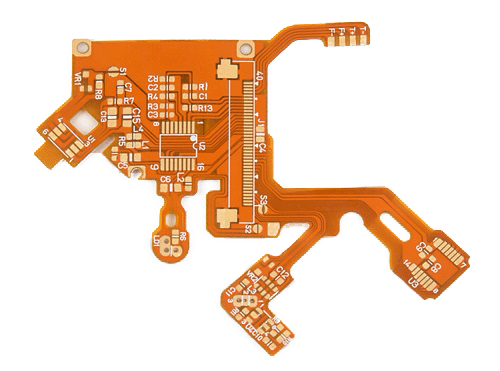
While placing orders for flexible or rigid-flex PCB assemblies on online portals, tiny technical issues or lacking information can lead to production delay. These may occur because of design errors, missing specifications, or miscommunication during manufacturing. For securing prompt PCB delivery and product quality, knowledge and prevention of the most common design and data-related issues are necessary. In this article, we will explore the most common technical problems in flex PCB design and give you real-world tips to avoid them—so that you can achieve faster turnaround and more reliable circuit performance. Supplying Incomplete or Inaccurate Data Provision of incomplete data is among the leading causes of quick-turn PCB manufacturing delays . Before submitting your files to Weeqoo, check your design package to ensure that it has: Complete Gerber files, an accurate spec sheet, or mechanical drawing. Even if you cant define every detail, always ...